Line Balancing and the Operation Bulletin
A sewing line is a chain of operations sharing one pace. Line balancing is the craft of assigning operations to operators so the chain wastes as little of that pace as possible, and it is decided before the first piece is sewn.
From bulletin to balance
The raw material is the operation bulletin: the style's operations in sequence, each with its measured SMV and machine type. From the bulletin and the target output, the arithmetic gives a pitch time, the minutes each station may consume to hit the target. The line target calculator turns manpower, minutes, SMV, and efficiency into that target; the operator and machine requirement calculators size the line from the other direction.
Balancing is then the assignment puzzle: combine short operations, split long ones where the method allows, and place them so no station carries much more than pitch. The station that does carry more becomes the bottleneck, and the bottleneck sets the line's true output regardless of what the plan says.
Balancing loss is a number
Perfect balance is impossible; the measure of how close you came is balancing loss: the idle fraction across stations created by uneven work content. It is one of the named branches in the loss tree, and on many lines it is the largest, quietly costing eight or twelve points of efficiency that get blamed on operators who are in fact waiting on the bottleneck.
The discipline is to compute it at plan time, from the balance sheet itself, and again from the floor's actual hourly output. A large gap between planned and actual balance means the plan met reality: an operator slower than graded, a machine limping, a method that does not work at pace. That gap is the supervisor's first diagnostic, better than any exhortation.
The pitch diagram earns its wall space
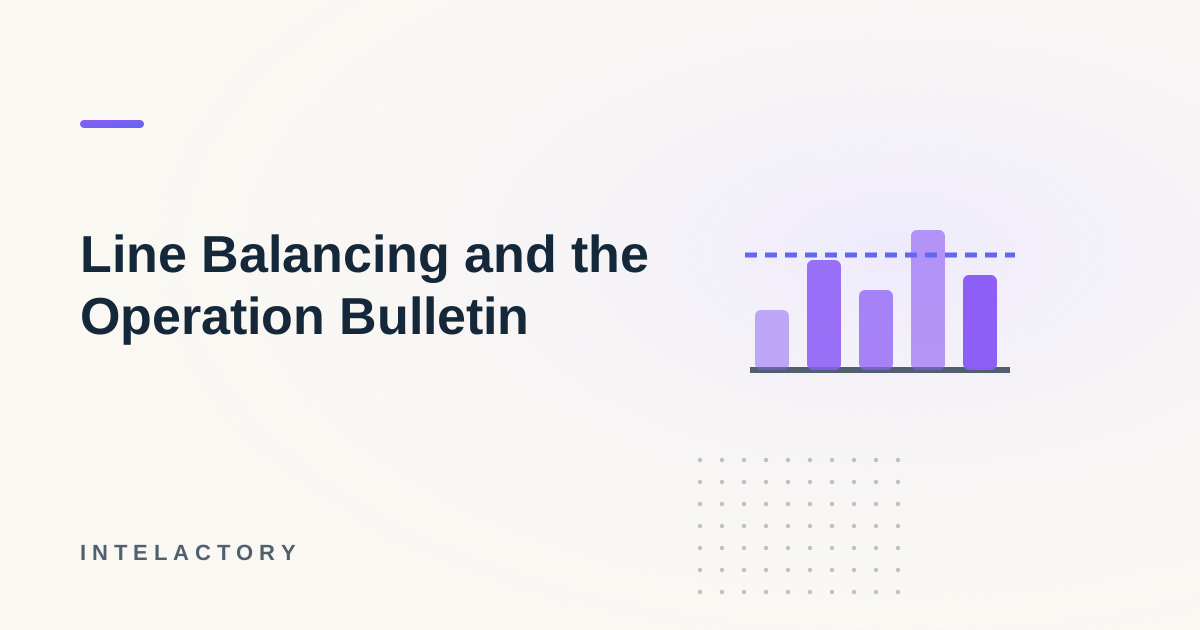
The visual version, stations on one axis, work content on the other, with the pitch line drawn across, makes the bottleneck visible to everyone including the operators. Lines that post it tend to fix imbalances faster, because the conversation shifts from who is slow to which station is overloaded, which is both more accurate and more fixable.
What good looks like
A well-run balancing practice has three habits: balances are built from measured SMVs and the operator skill matrix rather than averages; the first two hours of a new balance are watched station by station and adjusted on the spot; and every balance is archived with its achieved efficiency, so the next similar style starts from evidence. The craft compounds, and the lines show it.